
Industrial materials do not have to become waste when equipment reaches the end of its working life. A circular approach looks for ways to keep products, components and materials in use for as long as possible — preserving value and reducing avoidable waste.
What is a circular economy?
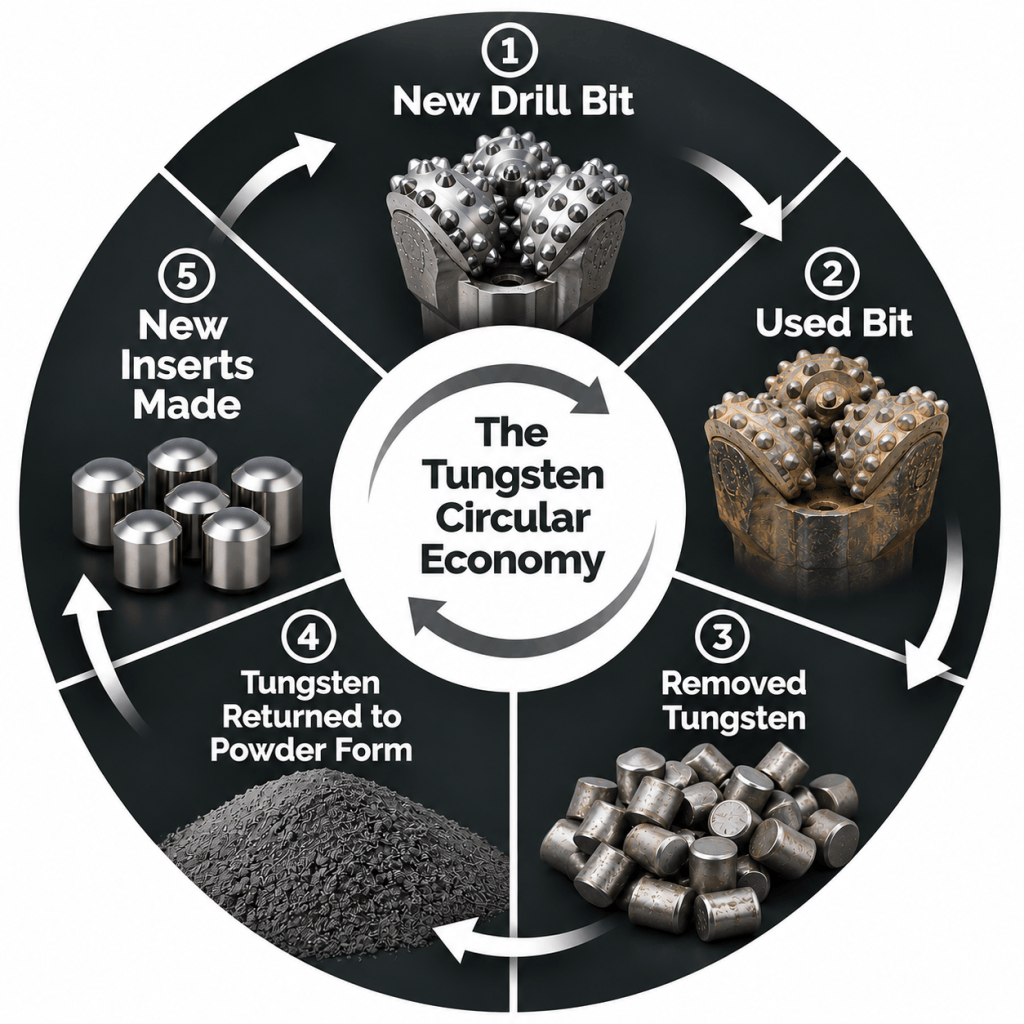
A circular economy is an alternative to the traditional take–make–dispose model. It aims to design out waste and pollution, circulate products and materials, and help regenerate nature. For metals and other industrial materials, this means keeping them in use through repair, reuse, remanufacturing and recycling wherever practical.
Why it matters for mining and construction
Mining and construction operations use equipment made from materials selected to perform in demanding environments. Drill bits wear down and eventually leave service, but the materials within them can still hold value. Separating tungsten carbide components from steel can help direct each material into an appropriate recovery route.
Recovering materials is not a substitute for responsible sourcing or efficient operations. It is one part of a broader resource strategy: retain value in materials already in circulation and make better use of what has already been produced.
A practical circular process
01. Collect
Collection bins give site teams a designated place to set aside used drill bits and tungsten-bearing materials as they come out of service.
02. Sort
Collected equipment is sorted so valuable tungsten carbide components and steel can be identified and handled separately.
03. Weigh and recover value
Material is weighed and its recovered value is paid to the customer. Sorted materials can then move toward suitable downstream recycling and processing.
How V&B supports the cycle
V&B Specialty Recycling helps mining and construction companies take a practical step toward material recovery. We supply bins, coordinate pickup, sort and weigh used drilling materials, and pay for the value recovered.
Our focus includes tri-cone and PDC drill bits, hammer bits, tungsten carbide buttons and inserts, and other tungsten-bearing materials. By making collection and sorting straightforward, we help customers move used components into the next stage of the recovery chain rather than leaving valuable material unidentified or unused.
Resource value does not end when a drill bit does.
A circular economy depends on many links working together — from the businesses that collect and sort materials to the downstream processors and manufacturers that turn recovered inputs into new products. V&B is focused on making that first recovery step easier for industrial customers.

